Key Takeaways
- A successful 4-room BTO interior design project starts with planning your home around daily habits, not just layout or aesthetics.
- Defining clear lifestyle zones helps you create a space that supports hosting, cooking, work, and storage needs.
- Choosing the right layout strategy, whether open, semi-open, or privacy-first, shapes how your home functions day to day.
- A room-by-room storage plan keeps your home organised without making it feel cluttered or overbuilt.
- Checking for defects and taking accurate measurements early helps prevent costly renovation mistakes and ensures a smoother process.
Introduction
Designing your very own 4-room flat can feel exciting, but it can also be overwhelming once the practical decisions come into play. Layouts, storage, and daily routines matter far more than aesthetics and exciting design ideas, yet they are often the hardest to plan for.
Approaching your 4-room BTO interior design project as a system rather than a series of choices can make the entire process feel more manageable. This guide walks you through a clear framework you can build around from the moment you collect your keys, helping you create a home that functions smoothly from day one.
Define Your Lifestyle Zones
Before getting into sofas, colours, or finishes, take a step back and think about how your home needs to function day-to-day. This stage sets the direction for everything that follows and helps you avoid costly changes later on.
Based on your actual habits, you can break your home into several lifestyle zones:
- Hosting and social space: Do you entertain often or prefer a quieter living area? This determines how open your living and dining areas should be and whether you need flexible seating.
- Cooking and kitchen use: Heavy cooking requires better ventilation, more prep space, and durable finishes. Light cooking allows for a more open, integrated kitchen.
- Work-from-home needs: If you work remotely, decide whether you need a dedicated room, a study corner, or a flexible workspace that can be tucked away.
- Children or future planning: Even if you do not have kids yet, planning adaptable spaces early can help avoid major changes later.
- Storage habits: Consider what you own now and what you are likely to accumulate. Build your storage around your actual usage, so everything has a place.
This approach helps ensure your 4-room BTO interior design is shaped around how you actually live, rather than trying to fit your lifestyle into the space.
Choose a Layout Strategy That Fits Your Lifestyle
Once you have a clear idea of how you use your space, the next step is to shape your layout around it. Most BTO interior design plans tend to follow one of three practical layout approaches:
1. Open Living-Dining Layout
An open living-dining layout removes visual barriers between the living room, dining area, and sometimes even the kitchen, creating a more spacious and connected environment.
This works especially well for smaller households or couples who value natural light and enjoy a more social, interactive space. A couple who hosts friends occasionally might opt for a large sofa facing a dining table, with the kitchen opened up using a peninsula counter so conversations can flow across spaces.
However, this layout requires careful planning to maintain a cohesive look, as materials and colours need to flow seamlessly. Storage also needs to be well integrated, since clutter is more visible in an open setup.
2. Semi-Open Layout
A semi-open layout offers a middle ground by keeping spaces connected while introducing subtle separation through features such as partial walls and glass panels. It is a practical choice for homeowners who want flexibility, allowing spaces to feel open without being fully exposed. A family that cooks regularly might choose to install sliding glass panels or a half-height partition to separate the kitchen and contain cooking fumes while keeping the space visually connected.
You can also add storage along these partitions, such as built-in cabinets or shelving that doubles as a divider. This helps you maximise space without adding unnecessary bulk.
3. Privacy-First Layout
If your household needs more structure and quiet, a privacy-first layout can be a more comfortable fit. This approach works well for larger families, multi-generational living, or anyone who needs dedicated spaces for work or rest. It focuses on clearly defined, enclosed areas where each room serves a specific purpose.
For example, one bedroom can be set up as a proper home office for focused work, while the kitchen remains fully enclosed to keep noise and cooking activity contained. This layout makes it easier for everyone in the home to share the space with less disruption. However, it requires careful attention to lighting and layout flow to avoid making the space feel too enclosed.
A Practical Storage Blueprint for Every Area of Your HDB Flat
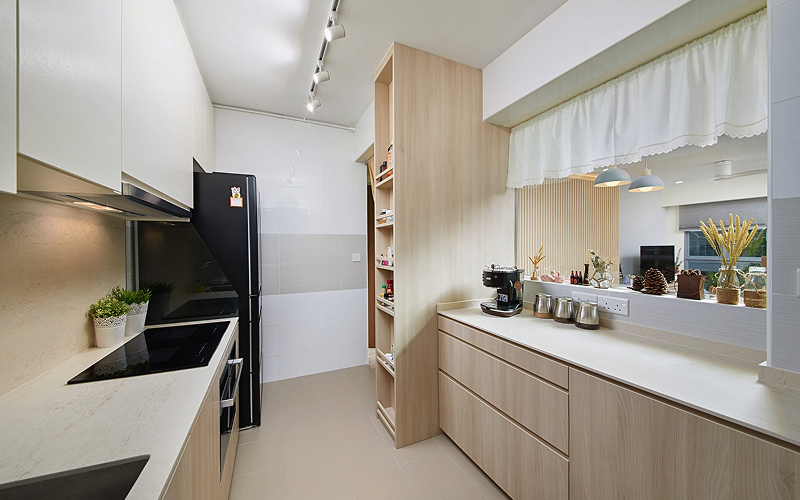
Storage is easy to overlook when renovating a new flat, but it plays a big role in how your home feels day to day. Without a proper plan, clutter can build up quickly, even in a well-designed space.
Here is a practical storage blueprint you can adapt for your BTO renovation:
Entryway
Your entryway is where daily routines begin and end, so it needs to be simple and efficient. Opt for built-in shoe cabinets with proper ventilation to help keep things tidy, and use slim consoles or ledges to store everyday items. Small hidden compartments are also great for storing keys, mail, and loose items.
Kitchen
The kitchen benefits most from vertical storage. Maximise space with full-height cabinets and use pull-out systems for easier access to pantry items. You can also use internal organisers for your drawers and utensils to keep everything in place. When it comes to 4-room BTO interior design, it is best to plan your kitchen storage from the start, as it is one of the hardest areas to adjust later on.
Living and Dining Area
Storage in shared spaces should feel seamless rather than bulky. TV feature walls can incorporate concealed storage, while bench seating with hidden compartments adds functionality without taking up extra room. Multi-functional furniture can also help you stay flexible as your needs change. The key is to avoid overbuilding, so storage supports your lifestyle without dominating the space.
Bedrooms
Bedrooms usually require more personalised storage. Choose wardrobes that are sized based on what you actually own, rather than a standard configuration. Where needed, you can integrate study desks or vanities to make better use of the space. Under-bed storage is also useful for items you do not need daily, such as seasonal clothing or extra bedding. Taking a customised approach here makes the space more practical in the long run.
Service Yard
Even smaller areas like the service yard can be planned more efficiently. Overhead cabinets are useful for storing cleaning supplies, while foldable drying racks help save space when not in use. Creating clear zones for laundry and utility items keeps everything organised and easy to access.
Design Theme Ideas for 4-Room BTO Homes
Choosing the right design theme can shape how a 4-room BTO flat feels and functions over time. Different styles influence not only the visual direction of the home, but also how space, storage, lighting, and materials are planned. For homeowners exploring interior design for 4-room BTO flats, selecting a theme early can help create a more cohesive and practical renovation approach.
Soft Minimalism Style
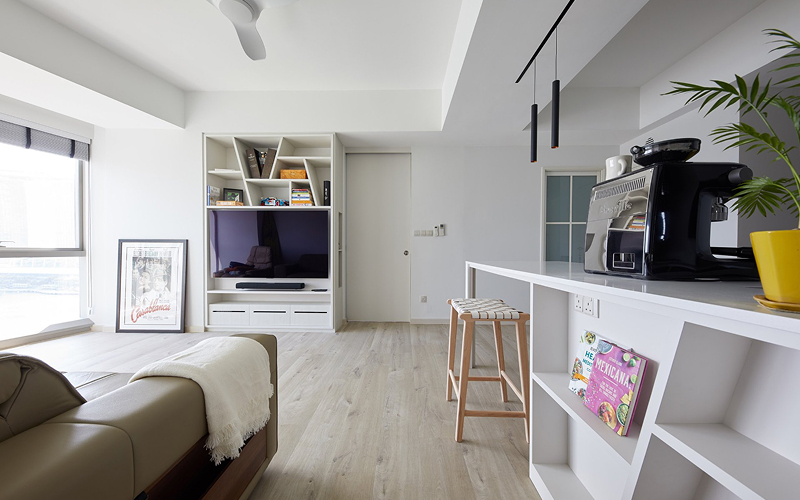
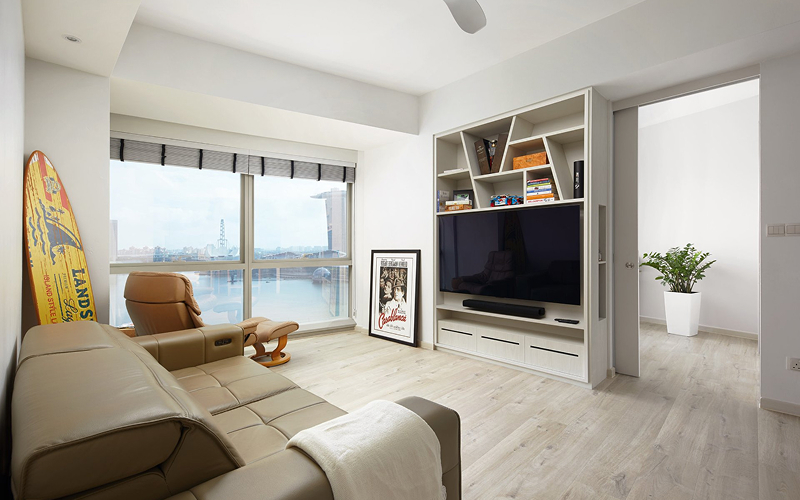
Soft minimalism focuses on simplicity without making the home feel stark or overly restrained. Warm neutrals, clean-lined carpentry, and subtle textures help create a calm environment while still maintaining comfort. This style works especially well in BTO layouts where open sightlines and uncluttered spaces can make the flat feel more spacious.
Curved details, light wood finishes, and concealed storage are often used to soften the overall look. Homes such as the Strathmore Avenue project demonstrate how soft, minimalist elements can create a bright, balanced atmosphere suited to everyday living.
Scandinavian-Muji Style
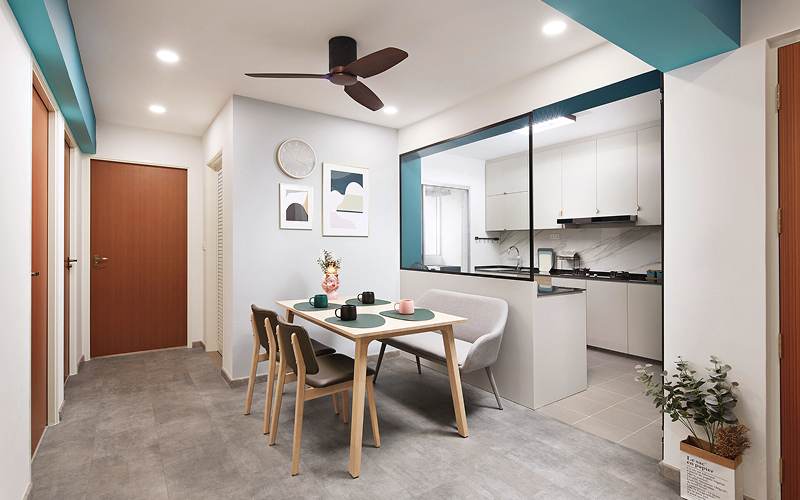
Scandinavian-Muji interiors blend Japanese restraint with Scandinavian warmth, resulting in spaces that feel functional, relaxed, and highly liveable. Light timber tones, muted palettes, and practical furniture choices are commonly used to maintain a clean yet welcoming appearance.
This theme works particularly well for families who prefer efficient layouts and understated styling. Open shelving, integrated storage, and natural textures help keep the home visually light while still supporting daily routines. The Tengah Garden project reflects many of these qualities through its restrained palette and practical space planning.
Modern Luxe Style
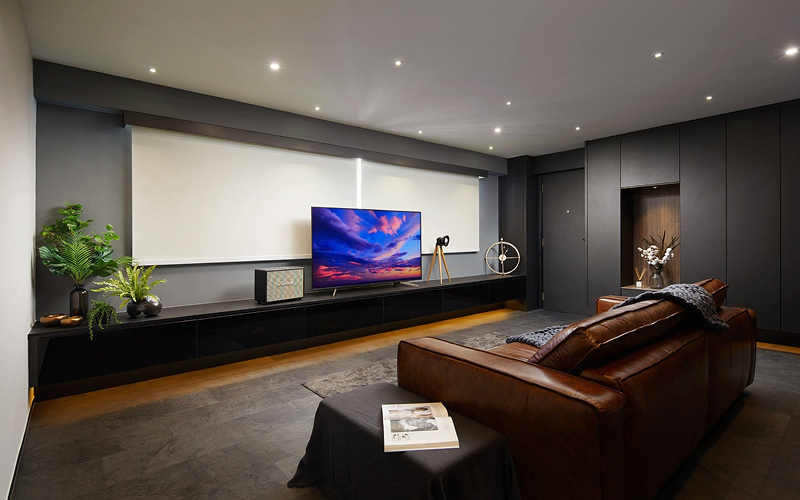
Modern luxe interiors introduce a more refined, layered look through richer materials, statement lighting, and stronger visual contrast. Marble-look finishes, darker accents, and metallic detailing are often balanced with clean forms to prevent the space from feeling overly heavy.
In 4-room BTO flats, this style is usually applied selectively to maintain openness while still creating a sense of sophistication. Feature walls, tailored lighting, and carefully chosen textures help elevate the space without overcrowding it. The Teck Whye project showcases how modern luxe elements can be incorporated while preserving functionality and flow.
Modern Contemporary Style
Modern contemporary design focuses on flexibility, practicality, and clean aesthetics that adapt well to changing lifestyles. Neutral palettes are often paired with contrasting materials, streamlined cabinetry, and open layouts to create a balanced and versatile living environment.
This approach suits homeowners who want a timeless look without committing to highly stylised themes. It also allows different materials and textures to be layered gradually over time. The Aalto project demonstrates how contemporary elements can be applied in a way that feels polished yet comfortable for everyday use. While Aalto is a condominium project, the design elements can easily be incorporated and adapted into a 4-room BTO home.
Defect and Measurement Checklist for New HDB Flats

While interior design planning can be exciting, it is just as important to focus on the practical steps. Start by checking your unit for defects that should be resolved before renovation begins. Once these are addressed, you can then move on to taking accurate measurements to support your renovation and carpentry planning.
Checking for Defects
When you first receive your keys and visit your unit, take the time to carry out a thorough defect inspection. Complete this step before any renovation begins to ensure that any issues are covered under the 1-year Defects Liability Period (DLP). Look for:
- Uneven walls or flooring
- Hollow tiles or cracks
- Door and window alignment issues
- Plumbing leaks or drainage problems
Once you have completed your checks, submit the list of defects to the Building Service Centre (BSC), typically within 7 to 30 days of key collection.
Taking Accurate Measurements for Renovation
Do not rely entirely on your floor plan. Do your research and always take measurements on-site, especially when planning for renovation works and carpentry installation.
Check key areas such as:
- Wall lengths and ceiling heights
- Beam positions and protrusions
- Electrical points and switches
- Window and door clearances
- Floor level differences (if any)
- Allowances for appliances and furniture
Accurate measurements help prevent issues like misaligned carpentry, blocked switches, or awkward gaps. This is typically managed by your interior designer or contractor as part of the renovation planning process, ensuring everything fits properly before fabrication begins. That said, having a basic understanding can help you communicate more clearly and avoid misalignment between your expectations and the final outcome.
Conclusion
A well-planned home does not happen by chance. When you approach your 4-room BTO interior design with a clear system, from lifestyle zoning to layout planning, every decision becomes more intentional and easier to manage.
At Home Guide Design, a reliable renovation contractor in Singapore, we can help you bring everything together. With more than 25 years of experience, we take a practical, end-to-end approach, from space planning and design development to renovation works, ensuring your home is both well-designed and easy to live in.
Contact us to discuss your layout and see how we can help you create a space that fits your lifestyle from the start.
Frequently Asked Questions
What is the average size of a 4-room BTO flat in Singapore?
A typical 4-room BTO flat in Singapore ranges between 90 to 100 square metres, depending on the project and layout configuration. This size usually includes three bedrooms, a living and dining area, a kitchen, and two bathrooms. The layout offers enough flexibility for families, couples, or homeowners planning a multi-functional space.
What is the best layout approach for a 4-room BTO flat?
The best layout depends on how the household uses the space daily. Open-plan layouts are popular because they improve movement, allow more natural light to flow through the home, and make common areas feel larger. Space planning should also account for storage, furniture proportions, and long-term lifestyle needs.
Which interior design style works best for a 4-room BTO?
There is no single best style, as different homeowners prioritise different needs and aesthetics. Minimalist, Scandinavian-Muji, modern contemporary, and soft modern themes are commonly used because they balance functionality with visual openness. The key is choosing a style that supports both comfort and practical living.
How much storage should be included in a 4-room BTO renovation?
Storage should be planned according to the household’s daily habits rather than being added excessively. Built-in carpentry is often used strategically in areas such as the entryway, bedrooms, and kitchen to maximise efficiency without making the home feel crowded. Well-planned storage helps maintain cleaner sightlines and better organisation over time.
How long does a 4-room BTO renovation usually take?
Most 4-room BTO renovation projects take around eight to ten weeks for a full renovation, depending on the scope of work and material availability. Simpler layouts with fewer structural changes may be completed faster, while custom carpentry and detailed finishing work can extend the timeline. Proper planning and coordination are important to avoid unnecessary delays.
Is it possible to make a 4-room BTO flat feel more spacious?
Yes, thoughtful layout planning and material selection can significantly improve the sense of space. Light colour palettes, concealed storage, and open sightlines help reduce visual clutter and make the home feel larger. Furniture scale and lighting placement also play an important role in how spacious the flat appears.
What should homeowners prioritise during a 4-room BTO renovation?
Homeowners should prioritise functionality, storage planning, and long-term usability before focusing on decorative elements. Decisions involving layout flow, electrical planning, lighting, and carpentry tend to have a greater impact on daily living. This is especially important for homeowners planning a home renovation in Singapore, where space efficiency often matters as much as aesthetics.
Are customised carpentry solutions necessary for a 4-room BTO flat?
Customised carpentry is not always necessary, but it can help maximise awkward corners and improve storage efficiency. Built-in solutions are often useful in compact bedrooms, kitchens, and living areas where standard furniture may not fully utilise the available space. The decision depends on the homeowner’s storage needs, lifestyle, and budget priorities.