Key Takeaways
- Japandi interior design for HDB apartments works best when you balance aesthetics with everyday functionality.
- Storage-first planning helps prevent the space from feeling empty or impractical.
- Thoughtful material choices ensure durability in Singapore’s humid climate.
- Layout and zoning are just as important as colour and furniture selection.
- Avoid common pitfalls like excessive minimalism, open shelving, and overly dark finishes.
Introduction
In Singapore, Japandi has become an increasingly popular interior design style due to its calm, clutter-free aesthetic. With its clean lines, muted tones, and use of natural materials, Japandi-inspired homes exude a sense of quiet that feels particularly refreshing in busy urban environments like Singapore’s.
Yet one concern often comes up: while Japandi interiors look beautiful online, they can feel sparse or impractical in daily life. This is particularly true for HDB flats, where storage needs, family routines, and spatial constraints cannot be ignored.
The key to successful Japandi interior design for your HDB lies in striking the right balance between simplicity and functionality. Rather than stripping your space down to the bare minimum, it is all about designing with intention. Here’s how.
What Is Japandi Style?
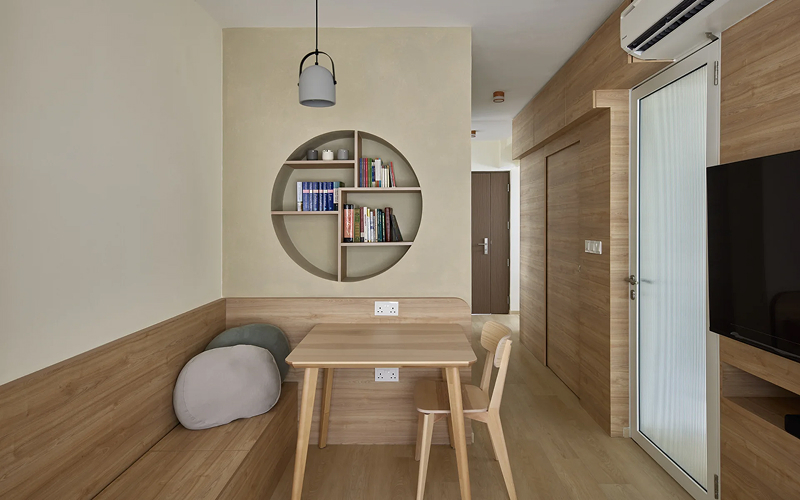
Japandi is a design style that blends Japanese minimalism with Scandinavian functionality. It brings together the simplicity and restraint of Japanese interiors with the warmth and comfort commonly found in Nordic homes.
At its core, Japandi focuses on clean lines, natural materials, and purposeful design. Every element has a role to play, whether it is furniture, lighting, or storage. The style avoids excess, but it does not aim to feel empty. Instead, it prioritises balance, where form and function work together seamlessly.
How You Can Adapt Japandi Interior Design for HDB Homes
When it comes to HDB interior design, it’s important to adapt design concepts to suit the realities of everyday life in Singapore.
1. Start with Storage-First Planning
Don’t treat storage as an afterthought. Instead, make it the foundation of your home’s layout. Without proper storage, even the most well-designed space can quickly feel cluttered.
For Japandi-inspired interior design, opt for storage options like concealed carpentry and adapt them to suit different areas of the home. For example:
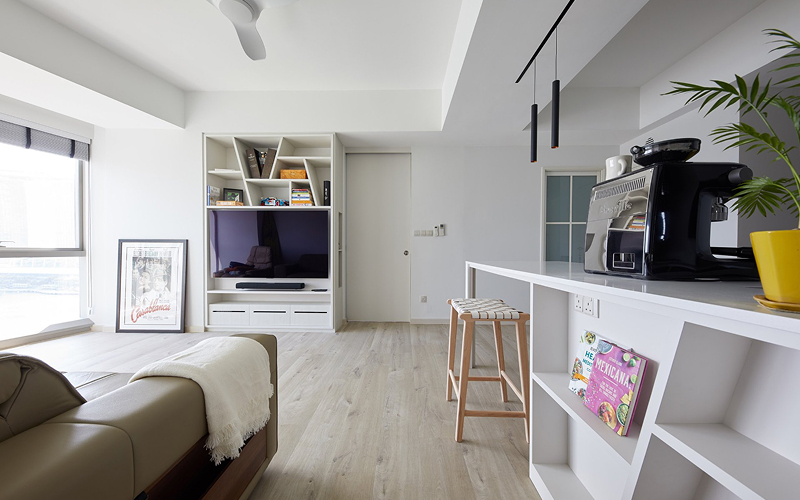
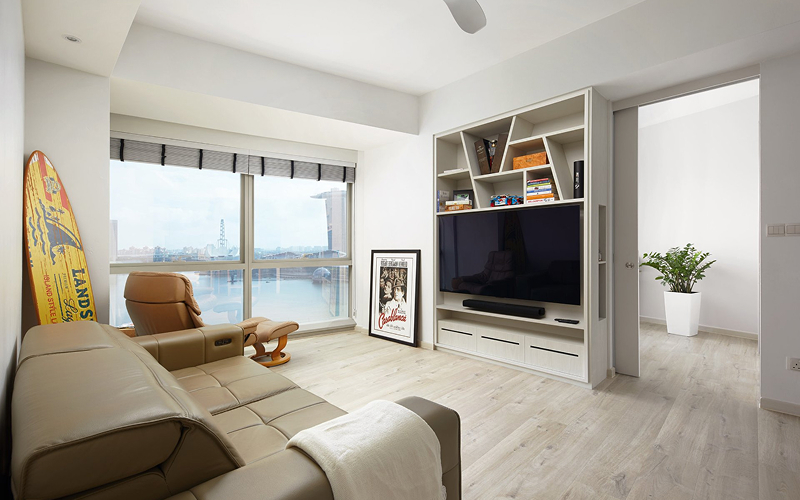
- Living room: Built-in TV consoles, feature walls with hidden compartments, or low-profile cabinets that blend into the space
- Bedroom: Full-height wardrobes and platform beds with hidden storage to maximise vertical and underutilised space
- Entryway: Concealed shoe cabinets paired with a small ledge or niche for daily essentials like keys and bags
- Kitchen: Deep drawers and lower cabinets that keep items organised and out of sight, reducing reliance on open shelving
By planning storage according to how each space is used, you create a home that is both practical and easy to maintain. This makes it much easier to preserve the clean, uncluttered look that Japandi interiors are known for.
2. Design for Daily Movement and Use
A home should not only look good but also support how you live. This is where many minimalist BTO interior designs fall short, as they do not always account for daily routines.
For Japandi interiors, plan your layout around how each space will be used. Furniture should be arranged to enable easier movement, especially in smaller HDB flats. At the same time, avoid leaving areas underutilised just to maintain a “clean” look.
You can also consider flexible furniture that serves more than one purpose. For instance, opt for an island countertop that can double as both a food preparation area and a casual dining or workspace. Extendable tables or modular seating are also great for maintaining versatility without compromising the overall aesthetic.
3. Build a Practical “Materials Map”
Japandi interior design is characterised by its use of natural materials, but it is important to ensure they are suited to Singapore’s climate and daily wear. A clear “materials map” helps you stay consistent while choosing finishes that are both durable and easy to maintain.
- Wood tones: Stick to light to medium shades such as oak, ash, or light walnut. Instead of solid wood, opt for wood-look laminates that offer better resistance to humidity, scratches, and long-term wear.
- Textured laminates: Use laminates with subtle grain or matte textures for carpentry, feature walls, or cabinetry. These add depth without overpowering the space and are easier to clean compared to highly porous materials.
- Microcement lookalikes: Rather than using actual microcement, consider paint finishes or laminates that replicate its soft, raw texture. These options are more forgiving, less prone to cracking, and simpler to maintain in a humid environment.
- Fabric choices: Choose fabrics that resemble linen but are more practical, such as polyester-linen blends or tightly woven cotton. These materials are more resistant to moisture, less likely to trap dust, and easier to clean over time.
To bring everything together, start with a base material such as light wood, layer in one or two neutral finishes, and add texture through fabrics or surfaces. This keeps the overall look cohesive while ensuring each material works well for everyday living.
4. Keep the Colours Balanced, Not Flat
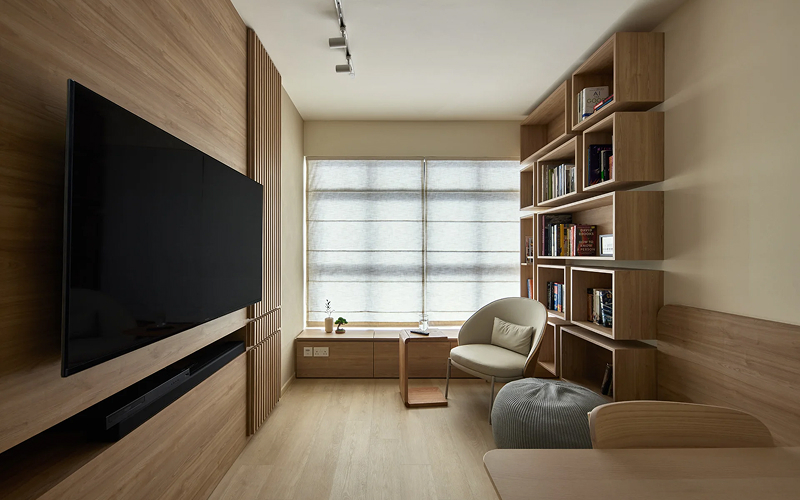
Neutral tones are a hallmark of Japandi design, but too much of the same colour can make a space feel lifeless. The goal is to create depth while maintaining a calm atmosphere.
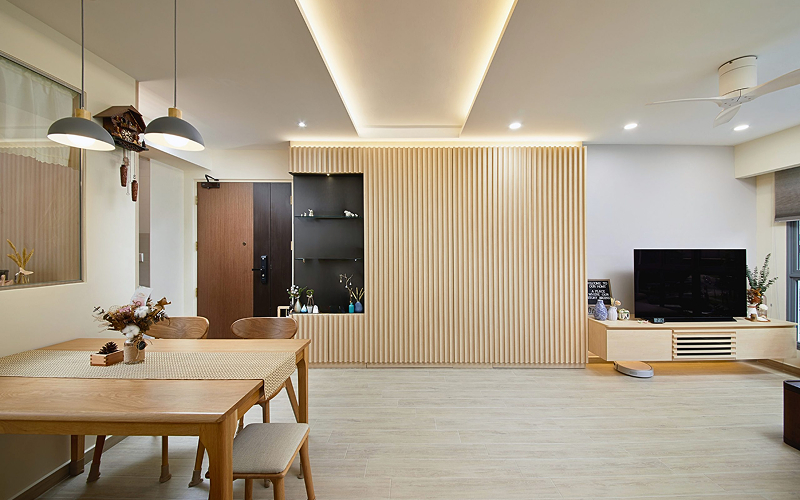
Layer different shades within the same palette. For example, you can use a warm off-white for your walls, pair it with light oak carpentry, and introduce slightly deeper beige tones through your sofa or curtains. This creates a subtle contrast without breaking the overall calm look. You can also vary textures, such as combining smooth laminates with wood grain finishes or soft woven fabrics, to add depth.
5. Use Lighting to Soften the Space
Home lighting also plays an important role. Instead of relying on a single ceiling light, combine different sources for both function and ambience.
- Ambient lighting: Cove lighting or concealed LED strips can provide a gentle, diffused glow that enhances the calm Japandi aesthetic
- Task lighting: Under-cabinet lights in the kitchen or desk lamps in work areas improve visibility while keeping the space practical
- Accent lighting: Floor lamps or table lamps add warmth and help define different zones within the home
Using warm-toned lighting and placing lights at varying heights helps create depth and prevents the space from feeling flat or harsh. When done well, lighting can make your home feel more comfortable and lived-in without compromising the calmness of Japandi.
Applying Japandi Interior Design Across Different Rooms
Japandi design combines Japanese simplicity with Scandinavian warmth, making it especially suitable for HDB homes where comfort, practicality, and visual calm all matter equally. Rather than applying the style uniformly throughout the home, each room can interpret Japandi principles in ways that support its daily function while maintaining a cohesive overall atmosphere.
Living Room
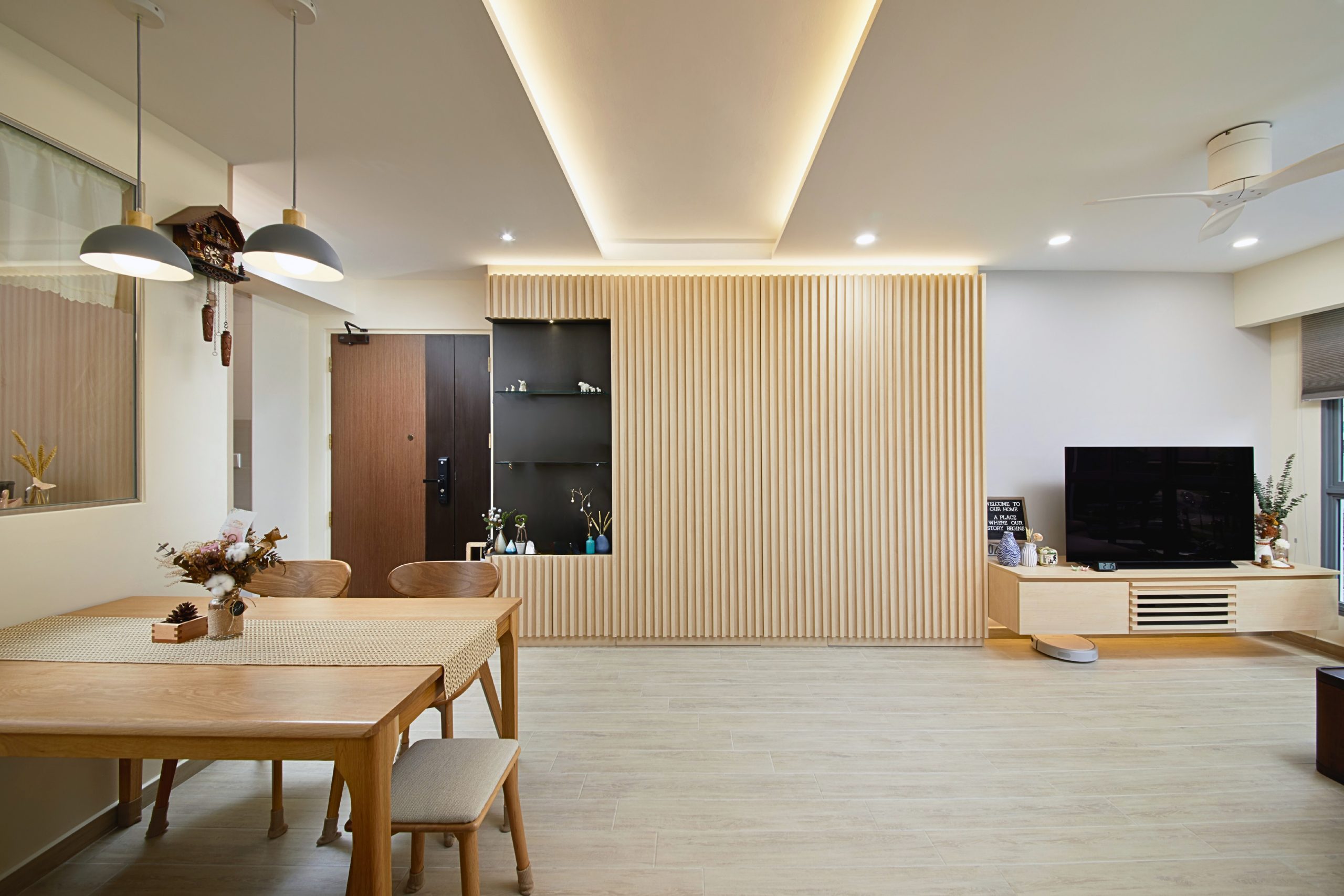
- Choose low-profile furniture with clean lines
Low seating, slim-profile sofas, and simple wooden furniture help create an open and grounded living area. This keeps the space visually light while making smaller HDB living rooms feel less cramped. - Use soft neutral tones and natural textures
Warm beige, light oak, linen fabrics, and textured rugs help soften the overall look without overwhelming the room. These natural finishes add warmth while maintaining the restrained aesthetic associated with Japandi interiors. - Limit decorative items intentionally
Instead of filling shelves and surfaces, focus on a few meaningful décor pieces such as ceramic vases, soft lighting, or handcrafted accessories. This creates a calmer and more balanced environment. - Maintain better visual flow through concealed storage
Built-in storage helps reduce clutter and keeps the living area visually organised. In projects such as the Strathmore home by Home Guide Design, thoughtful cabinetry and clean spatial planning demonstrate how Japandi HDB interior design can feel both functional and welcoming.
Kitchen
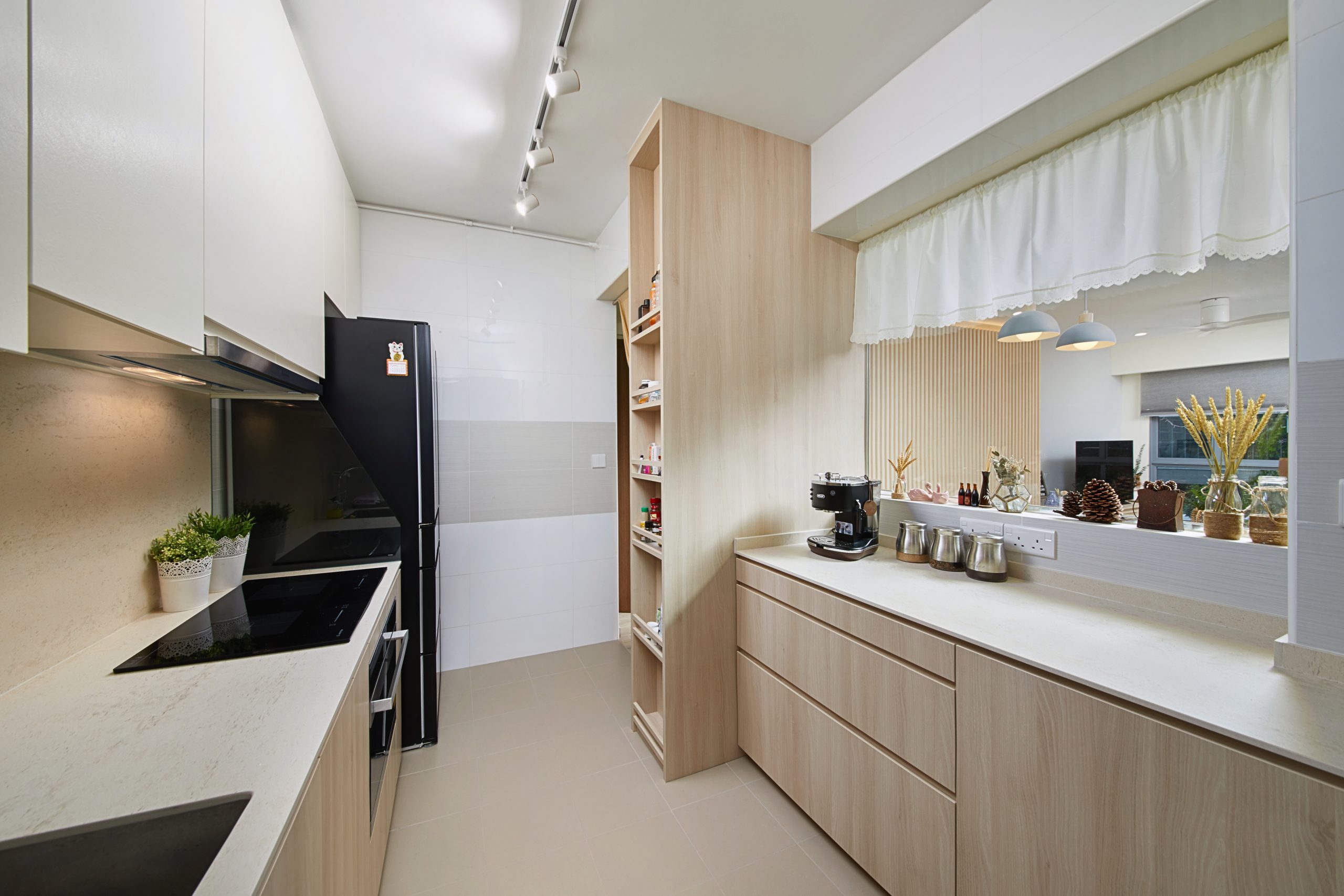
- Keep cabinetry clean and understated
Flat-panel cabinets with minimal hardware create a streamlined kitchen appearance. Light wood laminates or muted matte finishes work particularly well in maintaining the Japandi aesthetic. - Prioritise practical layouts and movement
Japandi kitchens focus heavily on usability. Keeping pathways open and ensuring work zones remain efficient helps support daily cooking routines without making the space feel crowded. - Introduce texture through natural materials
Wooden trays, stone-look countertops, ceramic tableware, and woven accents add subtle character without disrupting the simplicity of the space. - Reduce countertop clutter
Keeping only essential appliances visible helps maintain visual calm while improving functionality and ease of cleaning.
Bedroom
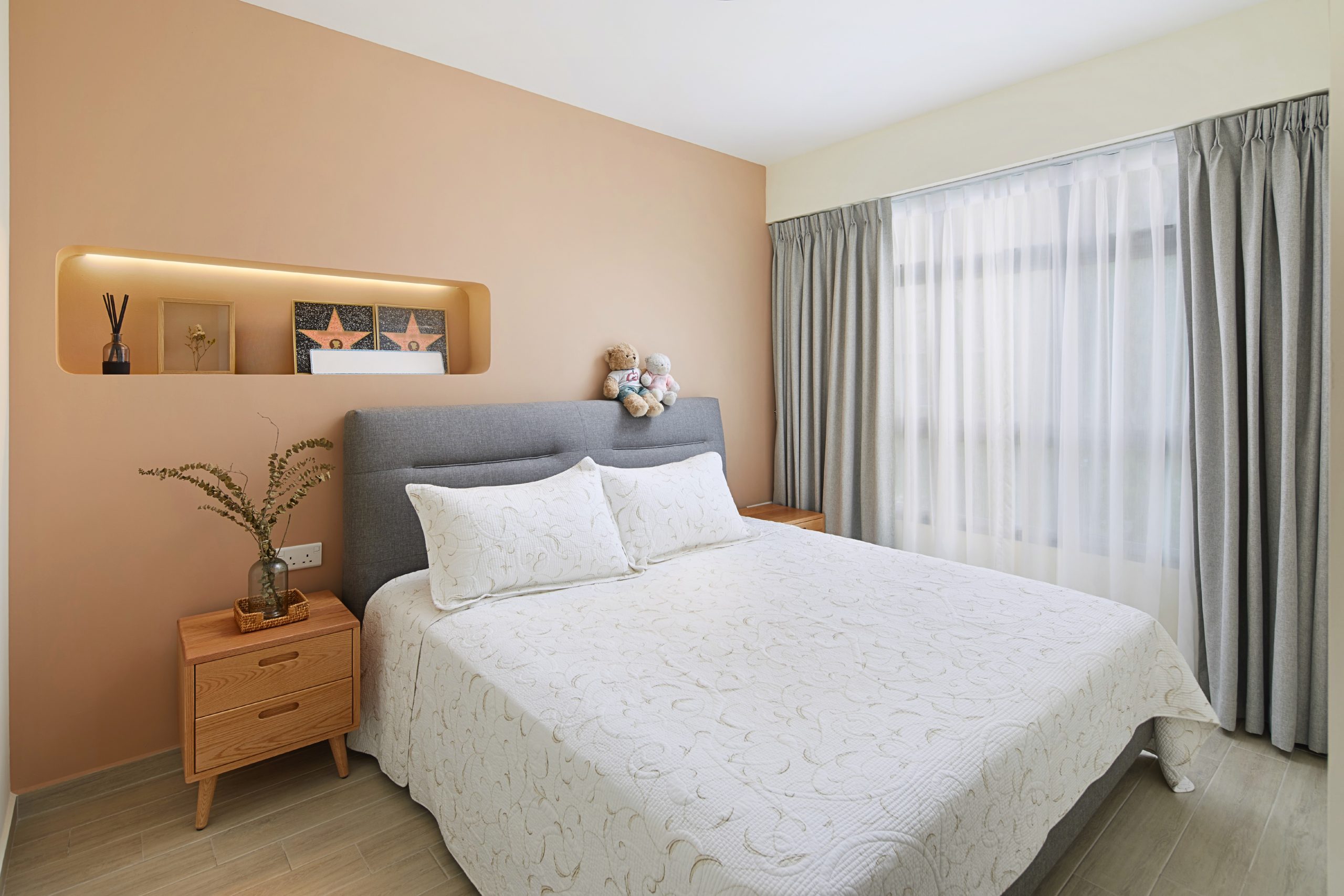
- Use soft and calming colour palettes
Muted whites, warm greys, and earthy tones help create a more restful sleeping environment. These colours work especially well when paired with soft natural fabrics and gentle lighting. - Incorporate simple wooden furniture
Bed frames, side tables, and wardrobes with clean lines reinforce the understated character of Japandi interiors while maintaining warmth and comfort. - Layer lighting for a softer atmosphere
Warm bedside lighting, concealed LED strips, or diffused ambient lighting help the room feel more relaxing and less clinical, especially at night. - Keep styling restrained and intentional
Instead of excessive décor, focus on a few tactile elements such as textured bedding, linen curtains, or handmade ceramics that contribute quietly to the atmosphere.
Bathroom
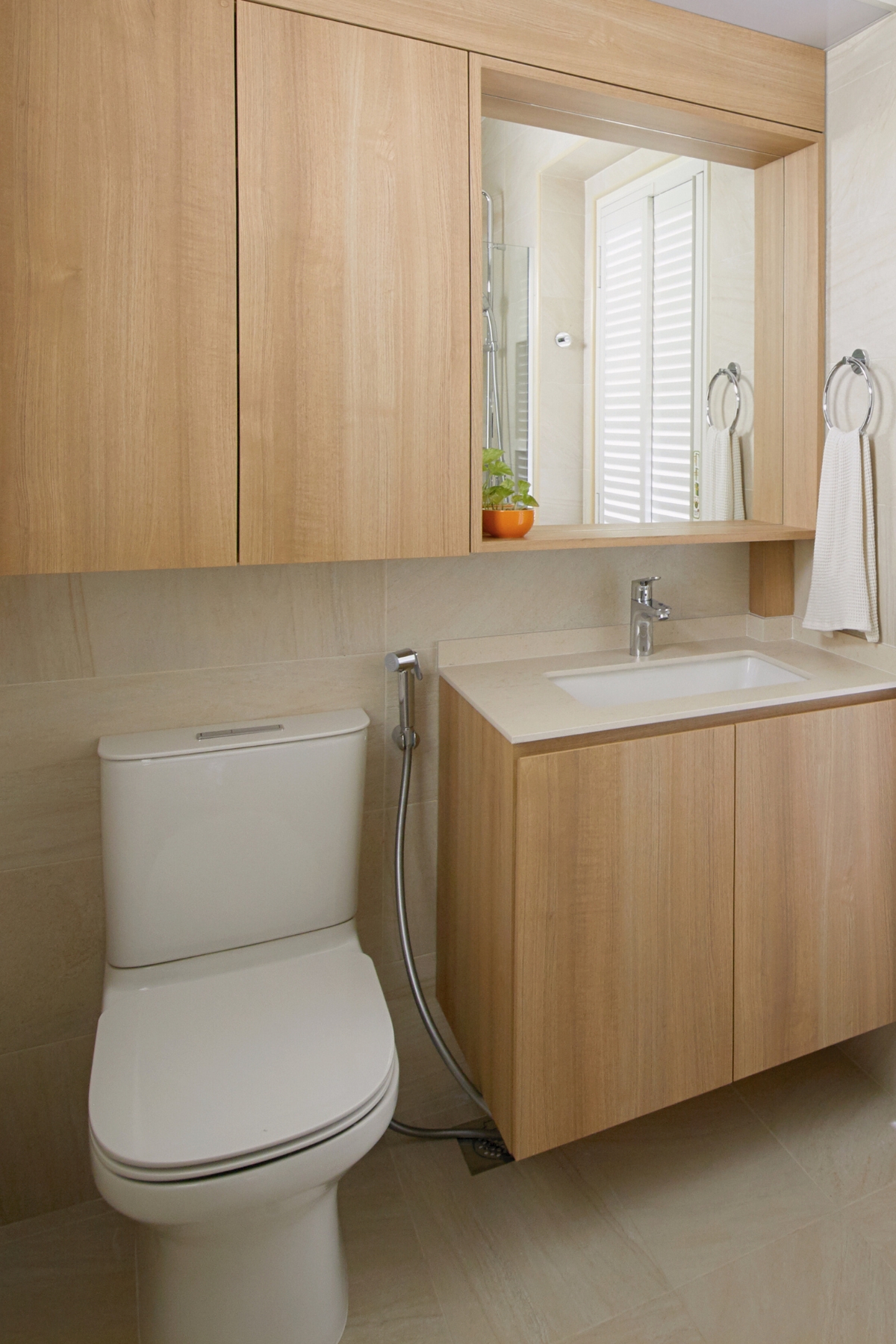
- Use earthy finishes and organic textures
Stone-look tiles, wood accents, and matte surfaces help create a more grounded and spa-like bathroom environment without appearing overly decorative. - Keep fixtures visually simple
Wall-mounted vanities, frameless mirrors, and clean-lined fittings help maintain openness, particularly in compact HDB bathrooms. - Maximise light and openness
Soft lighting and uncluttered surfaces make smaller bathrooms feel calmer and more spacious. Neutral tones also help reflect light more naturally throughout the space. - Focus on practicality and ease of maintenance
Japandi bathrooms are designed to remain functional for daily use while still feeling visually soothing. Concealed storage and simplified layouts help maintain cleanliness and organisation over time.
Japandi Elements That May Not Work for Every HDB Home
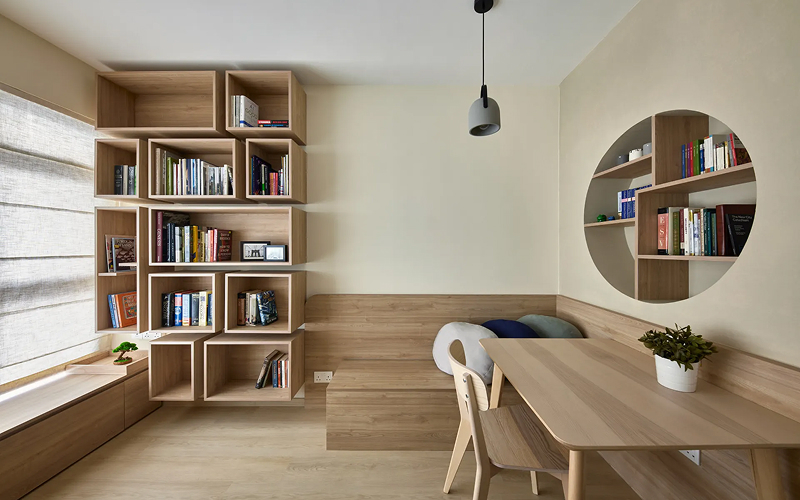
A common issue with Japandi interior design in HDB flats is going too far in the pursuit of minimalism. Knowing what to avoid can make a significant difference in how your home feels.
First, avoid using too much beige without variation. While it may seem cohesive, it can quickly become monotonous. Introduce contrast through textures or slightly deeper tones to keep the space engaging.
Second, avoid open shelving. While it looks appealing in styled photos, it requires constant upkeep to remain clutter-free. In a real home, concealed storage is often the more practical choice.
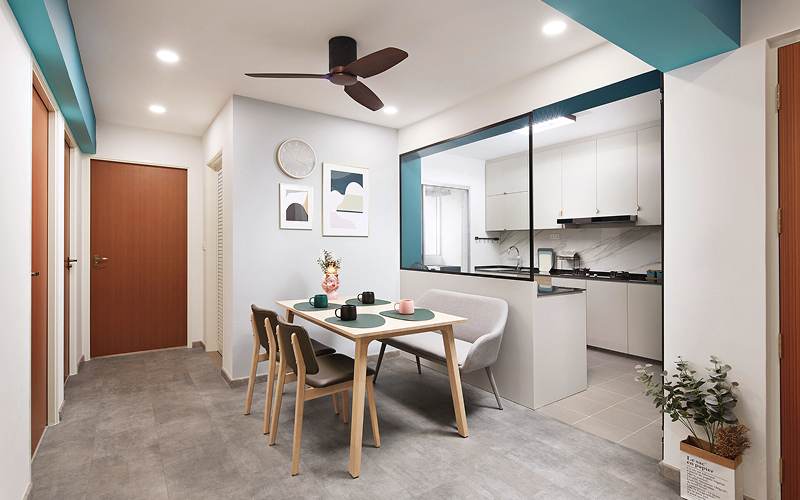
Third, be cautious with dark wood in low-light flats. Although darker tones can add richness, they may make smaller spaces feel heavier or more enclosed. Lighter finishes generally work better in compact environments, helping to keep the home looking bright and open.
Conclusion
Ultimately, Japandi interior design should make your HDB apartment feel calm, intentional, and comfortable to live in. The key lies in making deliberate choices. Start with storage, plan for real-life use, select materials suited to the local climate, and maintain balance in your palette. Most importantly, adapt the style to your lifestyle, rather than trying to replicate what you see online.
At Home Guide, we believe good design is not just about how a space looks, but how it works for you over time. As a design studio and renovation contractor, we manage everything from concept planning to on-site coordination and final detailing, ensuring a seamless process throughout. Whether you’re navigating renovation for a resale HDB or building a new home from scratch, our team can help you create a space that is practical and truly yours.
Contact us today.
Frequently Asked Questions
What is Japandi interior design?
Japandi interior design combines Japanese minimalism with Scandinavian functionality and warmth. It focuses on clean lines, natural materials, muted colours, and practical layouts that create a calm and uncluttered living environment.
Why is Japandi design popular for HDB homes?
Japandi design works well in HDB homes because it helps smaller spaces feel more open and organised. Its emphasis on simplicity, storage efficiency, and visual balance supports practical everyday living without making the home feel cold or empty.
Is Japandi interior design suitable for small HDB flats?
Yes, Japandi interiors are particularly suitable for smaller HDB layouts. The design approach reduces unnecessary visual clutter and uses light tones, clean carpentry, and efficient furniture planning to improve the sense of space.
What colours are commonly used in Japandi interiors?
Japandi interiors typically use warm neutrals and muted earthy tones. Colours such as beige, warm grey, off-white, soft brown, and light wood finishes help create a calm and cohesive atmosphere throughout the home.
How is Japandi different from Scandinavian or minimalist design?
Japandi blends elements from both Japanese and Scandinavian design philosophies. Compared to Scandinavian interiors, Japandi tends to feel more restrained and grounded, while minimalist interiors are often more structured and less focused on warmth and texture.
Is Japandi interior design difficult to maintain?
No, Japandi interiors are generally easier to maintain because they prioritise clutter-free layouts and functional storage. With fewer decorative elements and more intentional organisation, daily cleaning and upkeep become more manageable.
Can Japandi design work with existing furniture?
Yes, Japandi design can be adapted around selected existing furniture pieces, especially if they feature simple forms or natural materials. The key is maintaining visual balance and avoiding overcrowding the space with too many contrasting styles.
Does Japandi interior design only work for newer HDB flats?
No, Japandi design can also work well in resale flats when applied thoughtfully. Clean spatial planning, warm materials, and practical storage solutions can help older layouts feel more open, updated, and comfortable for modern living.